
Rental Loans DSCR · 30-year
The Property Qualifies. Not Your Paperwork.
Long-term financing for cash-flowing rentals, underwritten on the rent the property collects rather than the income you report. Thirty-year terms, up to 80% of value, and a coverage floor of 0.75x.
No credit pull to get a number. No tax returns, W-2s, or pay stubs — ever.
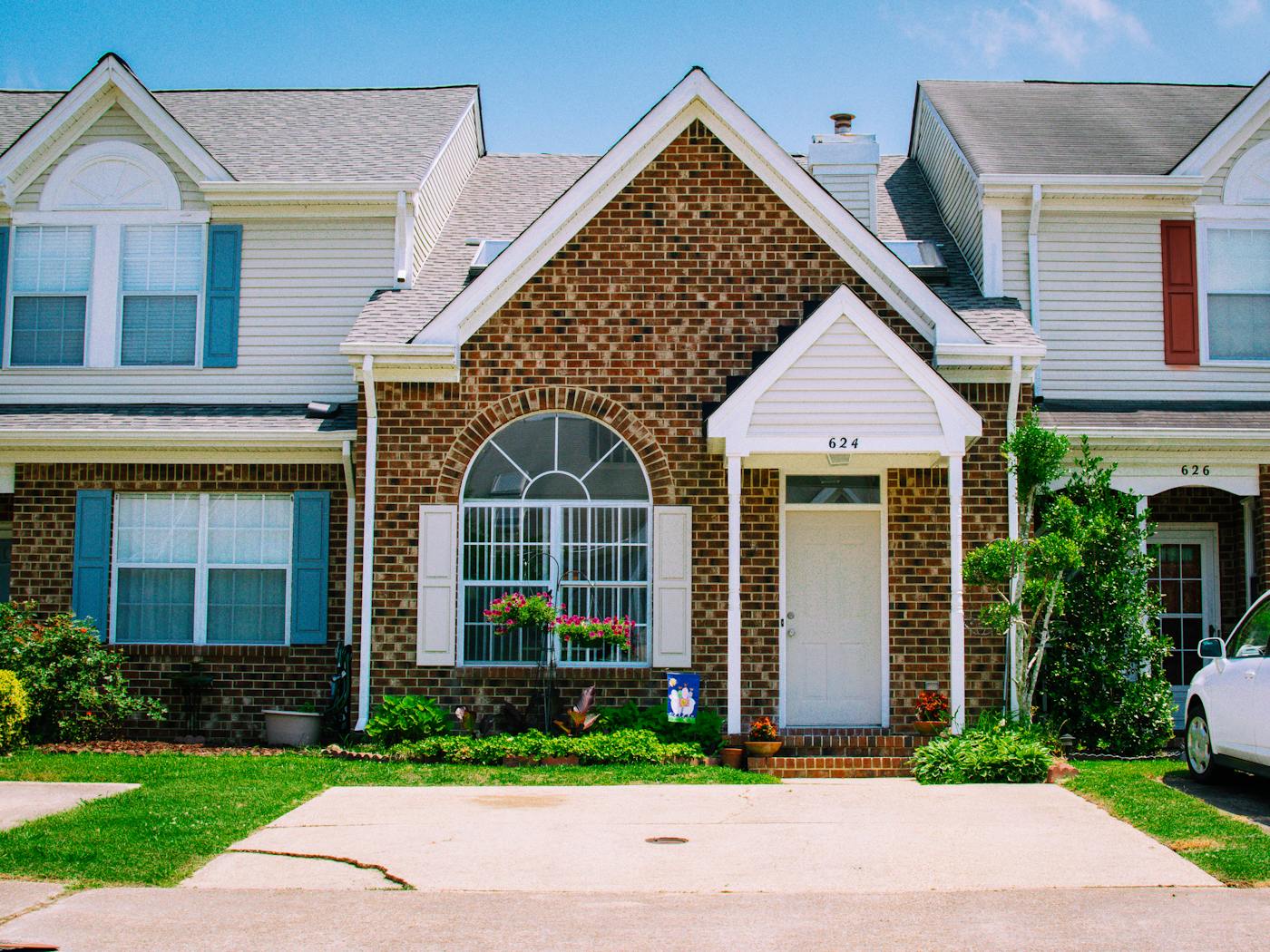
How a rental qualifies
- Gross monthly rent
- $2,850
- PITIA payment
- − $2,065
Full 80% leverage $785 a month of cushion
- 80%Max loan-to-value on a purchase
- 30 yrFixed-rate amortization
- 0Tax returns or W-2s required
- 48hrAverage approval time
What we fund
One Note. Five Ways Investors Use It.
The same thirty-year rental loan sits underneath all of these. What changes is the leverage, the coverage we need, and how much history the file has to carry.
Buy The Next Door On The Rent It Already Collects
The cleanest version of the loan. Bring the down payment and closing costs; the property's own cash flow does the qualifying. No seasoning, because there is no history to season.
- Maximum LTV
- 80%
- Minimum DSCR
- 0.75x
- Minimum FICO
- 660
- Loan amount
- $100,000 – $3,000,000
- Seasoning
- None
- Rate
- From 6.50%
- Prepayment
- 5-4-3-2-1 step-down
Replace The Debt Without Touching The Equity
The exit for a bridge loan, a balloon coming due, or a rate you no longer want to carry. Because no cash leaves the closing table, this keeps purchase-level leverage and needs no seasoning.
- Maximum LTV
- 80%
- Minimum DSCR
- 0.75x
- Minimum FICO
- 660
- Loan amount
- $100,000 – $3,000,000
- Seasoning
- None
- Rate
- From 6.50%
- Prepayment
- 5-4-3-2-1 step-down
Turn Trapped Equity Into The Next Down Payment
Pull cash out of a stabilised rental and redeploy it. Leverage steps back and the coverage floor rises to break-even, because the loan is growing rather than being replaced.
- Maximum LTV
- 75%
- Minimum DSCR
- 1.00x
- Minimum FICO
- 680
- Loan amount
- $100,000 – $3,000,000
- Seasoning
- 6 months
- Rate
- From 6.50%
- Prepayment
- 5-4-3-2-1 step-down
One Note Across The Whole Rent Roll
Two to twenty properties under a single blanket loan, qualified on the pool's combined coverage rather than property by property. A release provision lets you sell one door without retiring the loan.
- Maximum LTV
- 75%
- Minimum DSCR
- 1.20x across the pool
- Minimum FICO
- 680
- Loan amount
- $250,000 – $5,000,000
- Properties per loan
- 2 – 20
- Rate
- From 6.50%
- Release provision
- Sell one, keep the note
The Step Up From Four Units
Five to eight units is where residential financing usually stops and commercial paperwork begins. We keep it on a DSCR grid — the underwriting still starts with the rent roll, not a personal financial statement.
- Maximum LTV
- 70%
- Minimum DSCR
- 1.20x
- Minimum FICO
- 700
- Loan amount
- $400,000 – $3,000,000
- Seasoning
- 6 months on a cash-out
- Rate
- From 6.50%
- Amortization
- 30-year
Every scenario runs on a thirty-year note with fixed, 5-1 and 7-1 adjustable, and interest-only options; the prepayment step-down can be shortened or bought down to zero for a higher rate. Figures shown are illustrative and are not an offer to lend or a commitment to lend. Terms depend on the property, the lease, your credit, and the market, and are set in writing at underwriting.
The ratio
DSCR Is One Line Of Arithmetic.
Debt service coverage ratio is the whole underwriting question in a single division. Everything else on this page is a consequence of where your number lands.

PITIA is the monthly principal, interest, taxes, insurance, and any association dues. We use the signed lease or the appraiser's Form 1007 market rent — whichever is lower.
Below break-even. We still lend here. Expect lower leverage, a stronger credit profile, and more reserves — the equity does the work the rent cannot.
The property carries itself. Standard pricing and full leverage on a purchase or a rate-and-term refinance.
Real cushion. Our best pricing, and the tier that makes cash-out and portfolio loans straightforward.
How it works
Four Steps, And A Short List Of Documents.
A rental file moves in a straight line, because there is no personal income to reconcile along the way.
-
Price It
Send the address, the rent, and the taxes and insurance — or run the estimator. You get a coverage ratio and indicative terms the same day, with no credit pull to find out.
-
Send The Rent Roll
A signed lease if the unit is occupied. If it is vacant, send nothing — the appraiser's Form 1007 sets market rent, and a vacant property can still qualify.
-
We Underwrite The Property
Appraisal, title, and insurance run in parallel rather than in sequence. Your tax returns never enter it, because the file has nowhere to put them.
-
Close In Your LLC
A thirty-year note in the entity's name, with no transfer afterwards. We keep the servicing, so the payoff call reaches the people who wrote the loan.
The file
What A Rental File Actually Contains
A DSCR loan is underwritten to the asset. That changes what we collect — and, more to the point, what we never ask you for.
What We Collect
- A signed lease, or the appraiser's Form 1007 market rent
- A full interior appraisal
- Hazard and flood insurance binders
- Entity documents for the LLC or LP
- A credit pull
- Roughly six months of PITIA in reserves
What We Never Ask For
- Personal tax returns
- W-2s or pay stubs
- Employment verification
- A debt-to-income ratio
- Your personal income, in any form
If the rent covers the payment, most of the file is already written.
Questions
The Things Rental Borrowers Ask First.
A long-term rental loan qualified on the property's cash flow rather than the borrower's personal income. DSCR stands for debt service coverage ratio — the rent a property collects divided by the payment it owes. If the rent covers the payment, the property qualifies, regardless of what your tax returns say.
Gross monthly rent divided by PITIA — the monthly principal, interest, taxes, insurance, and any HOA dues. A property renting for $2,850 against a $2,065 payment has a DSCR of 1.38x. We use the signed lease or the appraiser's Form 1007 market rent, whichever is lower, so an above-market lease will not inflate the ratio.
Our floor is 0.75x on a purchase or rate-and-term refinance. Below 1.00x the property does not fully cover its own payment, so we offset it with a lower LTV, a stronger credit profile, and more reserves. Cash-out refinances start at 1.00x, and portfolio loans at 1.20x measured across the whole pool.
No. There are no tax returns, W-2s, pay stubs, or employment verification, and we do not calculate a debt-to-income ratio. We do pull credit and verify reserves, because both speak to whether the loan gets paid — but your personal income never enters the file.
Yes, and most of our borrowers do. These are business-purpose loans, so the note can be written directly in the name of your LLC or LP from the start. There is no transfer after closing and no due-on-sale clause to work around.
Single-family rentals, 2–4 unit properties, condominiums, townhomes, and planned unit developments, plus 5–8 unit multifamily under a separate grid. Portfolios of two to twenty properties can be written under one blanket note. We do not finance owner-occupied homes or second homes — these are investment loans only.
The standard structure is a five-year step-down — 5% in year one, declining by a point each year to 1% in year five, and nothing after that. Shorter terms are available, and the penalty can be bought down to zero in exchange for a higher rate. You choose the trade at pricing rather than discovering it at closing.
Yes — it is the most common way our two programs meet. A Riva bridge loan buys and renovates the property, and once it is leased this loan takes it out at a thirty-year term. Because both loans are ours, the refinance is a rate-and-term with no seasoning requirement rather than the start of a new relationship.
More on DSCR thresholds, seasoning, reserves, and closing in an entity. Read the full FAQ
Riva Lending originates business-purpose loans secured by non-owner-occupied real estate; we are not a consumer lender and do not originate loans on primary residences or second homes. All terms are subject to underwriting, appraisal, and final credit approval.